
- Candidates
- Login
- Set Up Account
- Create a Job Alert
- Search Tools
- Resources
- Employers
 Bonnie Johnson
 October 08, 2026
 Media Article
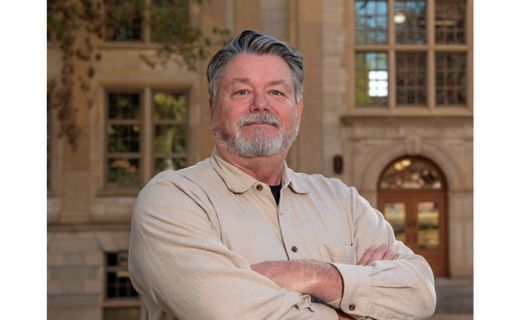
Marty Matlock, a professor in the University of Arkansas Department of Biological and Agricultural Engineering, has been appointed as a founding member of the World Agriculture Forum's U.S. Country Council. The appointment recognizes his contributions to agricultural and food systems resilience and his work in advancing sustainable agriculture.
The U.S. Country Council was established to bring together leaders from government, agriculture, academia, and industry to promote agricultural leadership, collaboration, and policy discussions. The group aims to translate global agricultural solutions into practical actions that address local challenges.
Matlock brings more than 20 years of experience in agricultural and food systems research to the council, including service as a senior adviser to the U.S. Secretary of Agriculture. As a founding member, he will help shape the council's governance structure and support efforts to strengthen agricultural resilience and food security.
Discussing the council's mission, Matlock said, "The purpose of the WAF U.S. Council is to translate solutions for global agricultural and food challenges into local actions and policies."
The council brings together governments, farmers, agribusinesses, and development organizations to address issues throughout the food supply chain. Its focus is on improving food security and developing solutions that support a more resilient agricultural system.
Matlock emphasized the challenge of meeting future food demand as the global population continues to grow. He said, "That means increasing food production by as much as 50% without one hectare more of land, one drop more of water and one liter more of petrochemical fuel. This is not an imaginary challenge. It is a demographic certainty. This is the challenge of our generation."
He noted that this challenge aligns with the mission of the University of Arkansas' Department of Biological and Agricultural Engineering, which focuses on innovations in sustainable food, water, and energy systems. Matlock said he looks forward to collaborating with experts around the world to help develop solutions for the future of agriculture.
Photo Credit: uark.edu




