
- Candidates
- Login
- Set Up Account
- Create a Job Alert
- Search Tools
- Resources
- Employers
.jpg "B.C. Hazelnuts: Rebuilding a Crop Through Climate and Collaboration")
 October 28, 2026
 Newsletter Article
At first glance, a hazelnut orchard doesn’t give much away. Rows of modest trees, quietly growing. But take a closer look – or more accurately look a little deeper – and it becomes clear that these systems are anything but simple.
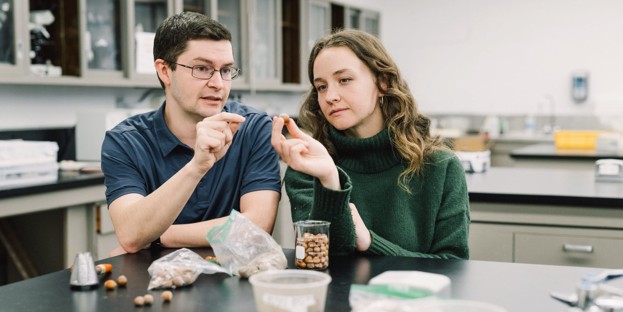
Water is moving constantly through the plant. Interactions invisible to the eye are taking place: roots interact with soil microbes in ways we’re only beginning to understand and, above it all, the atmosphere pulls moisture from the leaves.
For researchers in the Faculty of Land and Food Systems, hazelnuts allow us to examine that complexity, and ask a much larger question: what does it take to build agricultural systems in British Columbia that can hold up under climate stress?
In B.C., hazelnuts weren’t always a somewhat hidden crop, and the area once produced 90 percent of the country’s hazelnuts. A variety native to the province was once cultivated by Indigenous peoples for Indigenous food systems in forest gardens; the Beaked Hazelnut (k’áp’xw-az’) was not commercially grown, unlike the European commercial variety.
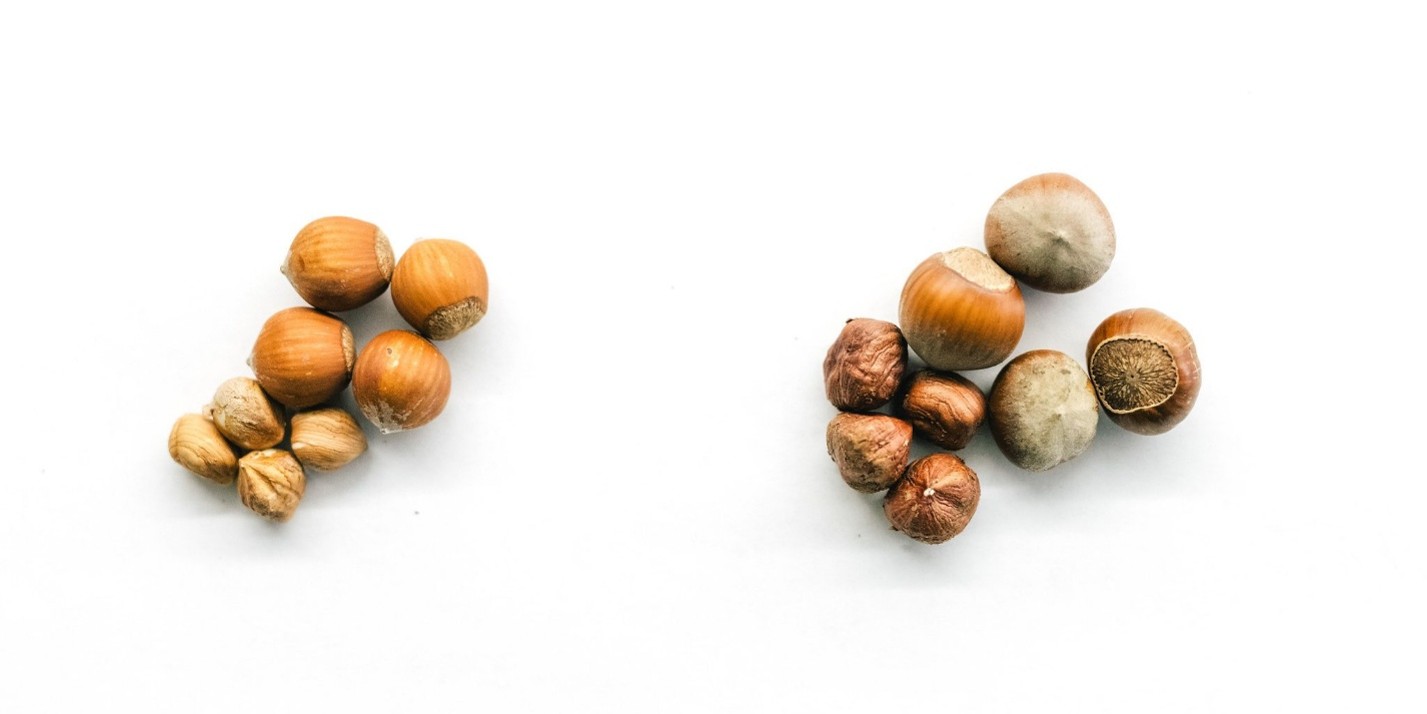
The latter was a large part of the province’s agricultural landscape, with most production centred in the Fraser Valley. That changed quickly in the early 2000s, when Eastern Filbert Blight (EFB) moved through orchards and effectively collapsed the industry.
What followed was a plan for recovery and an industry reset.
New orchards are now being planted with EFB-resistant cultivars, and growers are exploring different systems. And alongside that, researchers such as graduate students Karyna Howell and Steven Bristow, are working to understand how these woody perennial trees (that begin as shrubs) function under increasingly variable water-stress conditions.
But this stress may not be all bad news. Researchers like master’s student Howell are exploring how mild water stress might grow more resilient root systems and support microbial communities that can help plants access more nutrients.
“There’s been a shift,” says Bristow, a PhD researcher studying plant-water relations and drought stress. “We’re not just trying to bring the crop back. We’re trying to understand how to grow it better, and bring all of the pieces of a puzzle together.”
When water becomes the question
A lot of that work comes down to water. Not just how much is available in the soil, but how the plant uses what’s there.
Bristow’s research focuses on what’s known as plant-water potential, a measure of how much tension the water in the tree is under as water is pulled from the soil through the tree’s tissues and by the atmosphere. It’s a deceptively simple idea that captures something complex: the combined effects of soil moisture and atmospheric demand.
“It’s not just about the soil,” he explains, but “… also about what the atmosphere is doing.”
That matters, because it can change how we interpret what a tree is actually experiencing and when it reaches critical thresholds, offering growers a more precise way to match water use to actual plant needs.
For Bristow, that connection between data and decision-making is a key part of his research.
“Growers are looking for ways to be more efficient,” he says. “We want to provide data that helps them do that.”
Beneath the surface
If Bristow’s work tracks how water moves through the plant, Howell is focused on what happens when that movement starts to falter. Her research with UBC’s SoilRes3 Lab looks below ground, at how hazelnut roots interact with the soil during drought. In particular, she studies the release of organic compounds that shape the mini ecosystem that directly surrounds the root, or the rhizosphere, changing the complex and varied soil-plant and plant-microbe interactions.
What’s clear is that the plant is not passive. It’s a process that is both subtle and significant, and something she is not afraid to refer to as somewhat of an underground “party.”
“There’s a lot happening that we don’t see,” Howell says. “It’s a system adjusting.”
Her work sits within a broader effort to understand soil-plant interactions in perennial crops, an area that has historically received less attention than above-ground processes.
And, like much research, it comes with its own kind of intimacy.
“I grew more than a hundred saplings,” she says. “You get attached. It’s something you’ve spent time with.”
From research to reality
Both Howell and Bristow are quick to point out that the value of this work depends on what happens beyond the lab or greenhouse. There is, as Bristow puts it, a need for “people in the middle” – intermediaries who can translate research findings into tools and strategies.
Growers are increasingly engaged, particularly when it comes to data that can inform irrigation and long-term planning. There is also a growing recognition that rebuilding the hazelnut sector has much potential, particularly as shoppers look for local products in their grocery stores, such as hazelnuts from British Columbia.
Collaborations are important knowledge-transfer opportunities to identify grower challenges, which drive research questions and research activities. At UBC, this work is supported by a broader network with supervisors like Dr. Knipfer, as well as Dr. Jean-Thomas Cornelis from the SoilRes3 Lab, and greenhouse staff who keep experiments running day to day.
A crop that looks forward
Hazelnuts are increasingly being framed as part of a more resilient agricultural future.
As a perennial crop, they offer advantages: less soil disturbance, potential for carbon storage, and a longer-term approach to production. There is a sense that this crop is worth the effort.
“This is about more than hazelnuts,” Howell says. “It’s about understanding how we can support these systems.”
In that way, the orchard becomes something else entirely. Not just a place where trees grow, but a place where questions are being tested about water, resilience, and what agriculture needs for growth and high-value crops in the future. Find out more about UBC’s research in plant science at their website.
Interested in shaping the future of sustainable agriculture? Explore the University of British Columbia's programs, research opportunities, and pathways to a career in agriculture and food.
Learn more about UBC on their AgCareers.com Education Partner page!




